



OPINION:
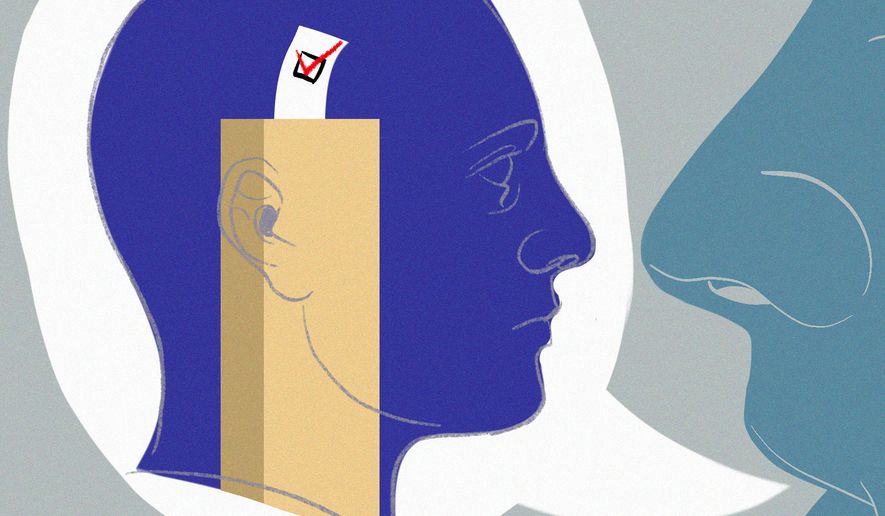
People who use the term “election denier” to attack their political opponents are like children on a playground using name-calling in an attempt to bully their peers.
The left has resorted to name-calling as their primary defense against legitimate questions raised about policies that lack election integrity. The term “election denier” is used like a locked gate to shut out further conversation and apply a stigma to everyone who is concerned about election integrity in America.
This is not a small percentage of the population; rather, this group represents more than 65% of the voters in our country.
In reality, though, the most concerning denial comes from those who deny that elections have been plagued by irregularities for decades. This does not mean the outcomes of those elections would necessarily be different, but to deny any irregularities and issues is to deny reality.
Here are just a few examples.
In 2000, butterfly ballots, hanging chads, and outdated election equipment caused national chaos. Eight years later, then-candidate Barack Obama was qualified on the Indiana ballot in the Democratic primary after a local election official conspired with others to forge fake ballot petition signatures.
In 2012, voters in Floyd County, Iowa, received mail-in ballots they had not requested; when investigated, the ballot request applications had been filed on their behalf, and the signatures faked.
In the highly contentious 2016 election, thousands of likely illegal duplicate votes were cast from people registered in multiple states, prompting candidate Hillary Clinton to claim it was not conducted legitimately.
In 2020, issues like outside funding being used in elections administration and claims of illegal ballot harvesting in states such as Georgia and Wisconsin raised widespread concern.
In addition, the most recent election, in 2022, showcased problems with printers, ballot paper size, and signature matching in several counties in Arizona, creating havoc and leading to claims of voter disenfranchisement. Many on the left refuse to acknowledge that real issues like these are taking place and have been occurring for years.
Sensible policy changes are the solution, yet a significant barrier exists. The simple identification of real issues like these in current elections is often met with the reply, “You’re an election denier.”
This name-calling inhibits progress toward transparency, accountability, and trust in elections.
That is why it is so important that Americans with evidence that our current election system is flawed know how to move past this name-calling and labeling and engage in productive dialogue. To achieve more trust and accountability in our nation’s electoral process, we must move toward legitimate commonsense solutions — policies that will solve the crisis of voter confidence and preserve America’s core value of a government of the people, by the people, and for the people.
Here are three steps to help rebut the name-calling you might have experienced.
Step 1: Articulate your rights as a voter. You deserve to have your vote counted as cast, and you deserve for all legal votes to be weighted equally. You can say that as an American citizen, you are entitled to representative government through the democratic process and that the democratic process does not result in true representative government if votes are not counted as cast or counted with equal weight.
Step 2: Identify your specific concerns. Are you concerned that your state does not require photo ID to vote or mails out live ballots to everyone without confirming whether voters are still alive? The more specific your concerns, the harder it will be to dismiss you. Or, if you experienced an election in which voting was confusing or in which there were specific issues, mention those clearly.
For example: “I waited in line for an hour, only to be told that this precinct was not operating and I had to go to another precinct. When I got there, I was only allowed to cast a provisional ballot because it was not my usual precinct. I am concerned my vote did not count, and I want to verify it did. I would also like for the state to investigate if any other voters were disenfranchised in the same way.”
Step 3: Identify positive solutions to the problems you’ve raised. You can request that your county or state confirm your vote. You can contact your legislator to share your experience with how the state’s election laws make fraud easy.
You can utilize the resources that we offer at the Center for Election Integrity to explore facts about different election policies and best practices and share them with your community. You can reach out to others on social media about your experiences and connect with people in your community and across state lines who also want to achieve more election integrity in our country.
“Election denier” is a buzzword that inhibits actual policy progress. At best, it is intellectually lazy; at worst, it is foundationally damaging to fair and free elections.
Voicing concerns about how elections are conducted and suggesting improvements is not denialism; it is commitment to the pursuit of respecting the rights of American citizens. The more we work together to make it easy to vote but hard to cheat, the more our country will heal as trust, transparency, and accountability are renewed through sound policy and the competent administration of elections.
• Anna Pingel serves as a policy analyst for America First Policy Institute’s Center for Election Integrity.
Please read our comment policy before commenting.