


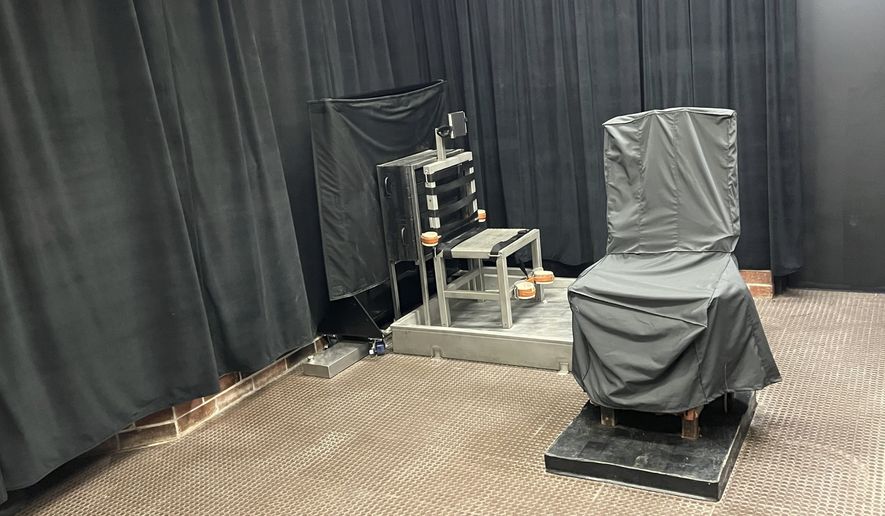

A South Carolina judge ruled Tuesday that the state’s use of the electric chair and firing squads to carry out death penalty executions were unconstitutional.
Both methods, which were brought back by legislation in 2021, violated the state constitution’s prohibition against cruel and unusual punishment, according to Circuit Judge Jocelyn Newman’s ruling, multiple outlets reported.
“In 2021, South Carolina turned back the clock and became the only state in the country in which a person may be forced into the electric chair if he refuses to elect how he will die. In doing so, the General Assembly ignored advances in scientific research and evolving standards of humanity and decency,” Judge Newman’s order read.
People were interested in these podcasts
The issue was raised when four death row inmates filed a civil lawsuit shortly after the revised death penalty legislation was signed in May 2021.
South Carolina Gov. Henry McMaster signed the bill into law due to a shortage of the lethal injection drugs.
Suppliers refused to sell more of the drug to the state after it carried out 36 executions between 1995 and 2011.
One of the four inmates had chosen to be executed by firing squad in April before the South Carolina Supreme Court put a temporary hold on the procedure and ordered the trial to be completed within 90 days.
The legal arguments themselves revolved around how much pain the inmates would receive during their executions.
Judge Newman determined that both the firing squad and electric chair amounted to torture because the deaths weren’t immediate and could cause lingering pain.
Three prisoners had chosen the electric chair since South Carolina first made lethal injection available in 1995.
The state hasn’t carried out any executions since 2011. Despite that, South Carolina still has the 10th most executions by state since 1976, according to the website World Population Review.
Mr. McMaster intends to appeal the ruling.
• This article was based in part on wire service reports.
Please read our comment policy before commenting.