


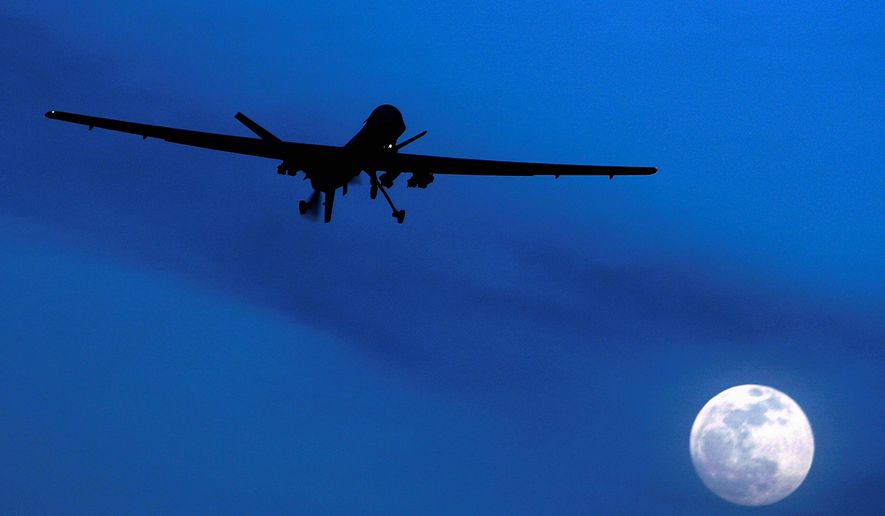

In a sign of its rapidly evolving mission, the Marine Corps is fielding its first MQ-9 Reaper remotely piloted aircraft and retiring its fleet of RQ-21 Blackjack drones.
The move, announced this week, is part of Marine Corps Commandant Gen. David Berger’s plan to restructure the Corps to confront the growing challenges in Asia posed by a rising China.
The Reaper is primarily used to carry out intelligence-gathering and reconnaissance operations, but also can perform precision strike missions by employing up to eight AGM-114 Hellfire missiles. Marine Unmanned Aerial Vehicle Squadron 1 (VMU-1), part of the 3rd Marine Aircraft Wing, is the first unit to adopt the Reaper.
People were interested in these podcasts
“Our unit is laying the groundwork for future squadrons to execute similar missions within” the Indo-Pacific Command, Maj. Keenan Chirhart, second in command of VMU-1, said in a statement. “VMU-1 is living [Gen. Berger’s] vision of Force Design 2030.”
The basic crew of an MQ-9 consists of a pilot to control the aircraft and command the mission and an enlisted aircrew member to operate sensors and guide weapons. The Reaper also can identify targets for laser-guided munitions, officials said, making its operators “uniquely positioned to enable naval and joint-force targeting from a remote location by a Marine aviator and sensor operator.”
France last month announced that it had successfully tested an MQ-9 Reaper as part of Operation Barkhane, the French-led anti-insurgency campaign in Africa’s Sahel region. It was used to deploy a GBU-12 Paveway II bomb in an “operational setting,” officials said.
Contact the author

Please read our comment policy before commenting.