



OPINION:
If you have not figured it out yet, the Commission on Presidential Debates is not impartial and is not for President Trump to win reelection.
In the first presidential debate, moderator Chris Wallace started intervening just 10 minutes in on behalf of Joe Biden — shutting down Mr. Trump just as he was making the point that COVID-19 casualties could well have been much higher under a President Biden.
Mr. Wallace came to the rescue on the individual mandate, whether to reopen the economy and Mr. Biden’s refusal to say whether he would seek to pack the U.S. Supreme Court if elected.
Time after time, as Mr. Trump framed issues in ways voters could understand but Mr. Biden supporters did not like, Mr. Wallace cut off the president, challenged the remarks on Mr. Biden’s behalf — Mr. Trump said at one point that it seemed he was debating Mr. Wallace rather than Mr. Biden — or moved to another topic. It was so bad even many of his Fox News colleagues criticized him for his actions.
Then, in the vice presidential debate, moderator Susan Page of USA Today, who is working on a book about Nancy Pelosi, continually cut off Vice President Mike Pence but let Sen. Kamala Harris exceed her time limits, prevented Mr. Pence from pressing important points and refused to press Ms. Harris on claims about packing the courts, Abe Lincoln-appointed judges and the discredited hoax that Mr. Trump called White supremacists “very fine people” after the riots in Charlottesville, Virginia, in 2017.
Then, the morning after what appeared to be a lopsided victory in the debate for Mr. Pence, the commission announced the next debate — set for Oct. 15 in Miami — would be held virtually because of Mr. Trump’s bout with the COVID-19 virus.
When the president said he would not debate virtually but proposed pushing it back so it could still be face-to-face, the commission canceled the debate.
A third debate is still on for Oct. 22, but it’s unclear now whether it will take place.
Whatever happens, the Commission on Presidential Debates has some explaining to do. How could it choose moderators for all three debates who so clearly favored one candidate? Steve Scully, the host of C-SPAN’s “Washington Journal” who was set to moderate the second debate, worked as an intern for Mr. Biden, attended the Biden Beach Bash in 2016 and tweeted out a piece then by David Brooks of The New York Times titled “No, Not Trump, Not Ever.”
Then, days before the debate was to take place, tweets emerged of him communicating with Anthony Scaramucci, who served in the Trump administration for 11 days and has been a bitter enemy since, apparently on strategy for the debate. Mr. Scully claimed his account had been hacked and deleted it. Kristen Welker, the NBC reporter who is to moderate the third debate, then deleted her account.
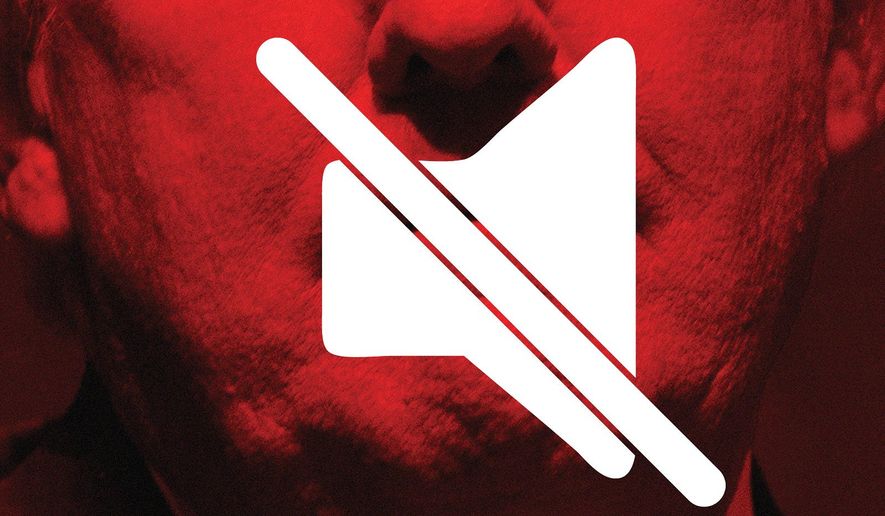
And it’s not just the choice of moderators. After the first debate, the Commission on Presidential Debates began looking at ways to change the format to avoid a repeat of what the Associated Press called the “disjointed first meeting” between Mr. Biden and Mr. Trump. It considered giving the moderator, who worked for Mr. Biden, a mute button to cut the mic of either candidate.
It was left to Bob Dole, the party’s senior statesman, to point out that the Republicans on the commission — who give it a patina of bipartisanship — were anti-Trumpers, such as former Sens. Olympia Snowe of Maine and John Danforth of Missouri, leaving the president with no one in his corner when it comes to debate decision-making.
There is no way the commission should be able to unilaterally cancel debates or change the rules. Its job is to express the negotiated will of the candidates, not favor one over the other.
While we’re at it, rather than give more control to moderators, how about give less? Rather than “gotcha” questions that tend to be softballs for Democrats and hard curves for Republicans, ask the kind of general questions that allow real discussion of issues — What do you plan to do to help the economy and why do you think this is the best course? What do you see as the future of the Middle East and America’s role in it?
Then devote long blocks of time to those discussions among the candidates, and yes, let them interrupt each other. We do this all the time in our daily conversations. We stop each other when points are made and offer our rebuttals right then, when the dispute is fresh in everyone’s mind, not three minutes later if and only if some moderator gives us permission.
Whoever wants to be president needs to prove they can handle these challenges. Stop protecting them. Let them hash it out. If they can’t handle tough conversations, they can’t be president — and the time to find that out is now.
• Martha Boneta is an American policy adviser, commentator and farmer who is known for her role in the passage of a landmark right-to-farm law in the Commonwealth of Virginia.
Please read our comment policy before commenting.