



The NFL trade deadline is back to being anti-climatic.
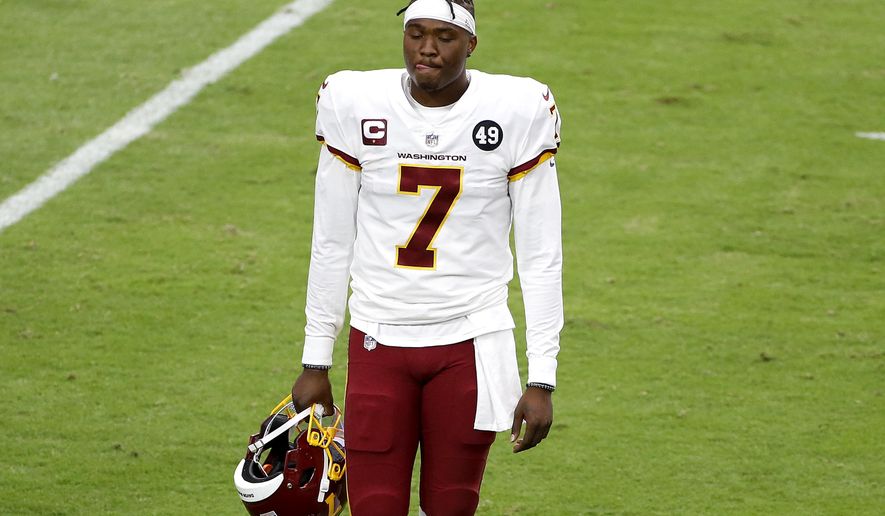
After a flurry of deals in 2017 and 2018, Tuesday’s deadline was a dud for the second year in a row. Despite a slew of rumors, Washington stood pat — opting not to trade Dwayne Haskins, Ryan Kerrigan or acquire anyone that could help its push for the NFC East. They weren’t alone. Around the NFL, there was no eye-popping, “I can’t believe they did that” type of deal that can be found in other leagues like the NBA and MLB.
In all, just two trades happened on Tuesday: The Miami Dolphins sent wide receiver Isaiah Ford to the New England Patriots, while the team also acquired running back DeAndre Washington from the Kansas City Chiefs for a sixth-rounder draft pick. The biggest moves came in the prior days when the Baltimore Ravens traded for defensive lineman Yannick Ngakoue and the Saints’ trade for linebacker Kwon Alexander.
People were interested in these podcasts
Those rooting for their teams to do something — or those simply hoping for chaos — were left disappointed. This year’s deadline hardly resembled the scramble of two and three years ago, when the NFL seemed to be rapidly changing.
Back then, stars were dealt and contenders made all-in moves to win now. The 2018 season saw Amari Cooper get traded a week before the deadline, and then Pro Bowlers like Golden Tate and Dante Fowler get dealt on the actual day itself. The year prior was even more hectic: Jimmy Garoppolo to the San Francisco 49ers. Marcell Dareus to the Jacksonville Jaguars. Duane Brown to the Seattle Seahawks.
NFL insiders pondered if a similar wave was to come this year. With the league’s salary cap projected to be significantly lower in 2021, some wondered if teams would be eager to get off high-priced contracts and thus cause lots of movement.
“The NFL trade deadline has been a non-event forever,” former Bears executive Greg Gabriel tweeted late last month. “Some feel that it could be different this year as teams want to dump salaries because the cap lowers in ’21.”
But in reality, the opposite happened: Teams were hesitant to take on additional money with a looming cap drop. During the offseason, the NFL and the players’ union agreed next year’s cap would be no less than $175 million — but that still represents a 12% decrease from the current figure ($198 million). The league has seen a decline in revenue without most fans in stadiums and the cancellation of preseason games.
Even teams with plenty of money to spend didn’t budge. In the NFC East, Washington, which has a projected $23 million in cap space, didn’t add anyone in an attempt to win the division. The team also kept those who were seen as possible trade candidates like Haskins, Kerrigan and defensive end Ryan Anderson.
Washington’s lack of action, however, shouldn’t come as a surprise. The trade market for Haskins was lukewarm after the team demoted the 2019 first-round quarterback from starter to third-string last month. Kerrigan reportedly had some interest around the league, but Washington still values his contribution to this season.
On Monday, Washington coach Ron Rivera indicated how much Kerrigan has meant to the team, despite the franchise’s all-time sack leader seeing a career-low in playing time. He highlighted Kerrigan’s role as a mentor for Chase Young and Montez Sweat.
“The Ryan Kerrigan situation is he’s been exactly what we’d hope he’d be,” Rivera said. “He really has. He’s contributed, he’s made impact plays for us, he’s impacting our defense, he’s impacting our young players on our football team, he’s setting the example. He’s the right kind of guy that we have here because he’s been here for 10-plus seasons.”
A year ago, all the big-name trades were done well in advance of the deadline. Star cornerback Jalen Ramsey’s trade to the Los Angeles Rams, for instance, was in mid-October. The Baltimore Ravens had acquired Marcus Peters from the Rams on the same day. The 49ers traded for wideout Emmanuel Sanders a few weeks later. Sure, it left for a dull deadline, but at least there was some exciting in-season movement.
The same can hardly be said for 2020. And what’s the fun in that?
Please read our comment policy before commenting.