


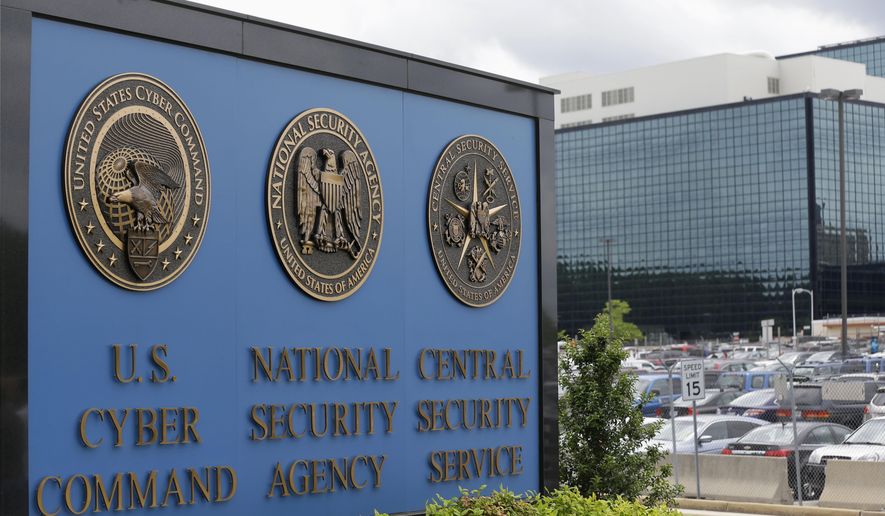

A former top U.S. National Security Agency lawyer is calling for Congress to hold social media platforms accountable and amend Section 230 of the Communications Decency Act.
Section 230 provides social media platforms protection from legal liability for material posted by users on their platform. Republican lawmakers have zeroed in on the provision as ripe for an overhaul resulting from perceived censorship of conservative content by social media platforms, while Democratic lawmakers have expressed a willingness to regulate social media platforms as well.
Now, Glenn S. Gerstell, who left the NSA as general counsel earlier this year, is making the case that fixing social media is a matter of national security and Congress should change Section 230.
People were interested in these podcasts
Mr. Gerstell wrote in the New Yorker that online disinformation poses an ongoing threat to the U.S. and it is time for the government to intervene.
“Amending Section 230 to impose some liability on social-media platforms, in a manner that neither cripples them nor allows them to remain unaccountable, is a necessary step in curbing disinformation,” Mr. Gerstell wrote.
The former NSA general counsel also wrote that Congress should look to curtail disinformation by making “knowing falsehoods” illegal, which he wrote would not violate Americans’ free speech rights recognized in the First Amendment.
Other components of the intelligence community have sought ways to diminish disinformation without changing federal law.
In-Q-Tel, a venture capital fund contracted with the intelligence community, has worked on an undisclosed deal for new technology that detects speech deemed problematic and to suss out people who say unsavory things on social media platforms.
On its website, the venture capital fund lists “infodemic” as a project utilizing artificial intelligence to provide “automated matching of fact-checked claims about COVID-19” but does not identify a portfolio company receiving funding as part of the project.
Whether regulation and legislative overhaul to stymie disinformation or new tools to crack down on misleading content are favored by policymakers is yet-to-be-determined, but the intelligence community will have input on whatever decisions the federal government makes.
Please read our comment policy before commenting.